


Comparing the Bombardier Challenger 300 and the Cessna Citation X
When choosing a private jet for business or leisure, two of the most popular super midsize jets are the Bombardier Challenger 300 series and the Cessna Citation X. As of 2026, these aircraft have evolved into the Challenger 3500 and Citation X+, setting new benchmarks for transcontinental performance and luxury.
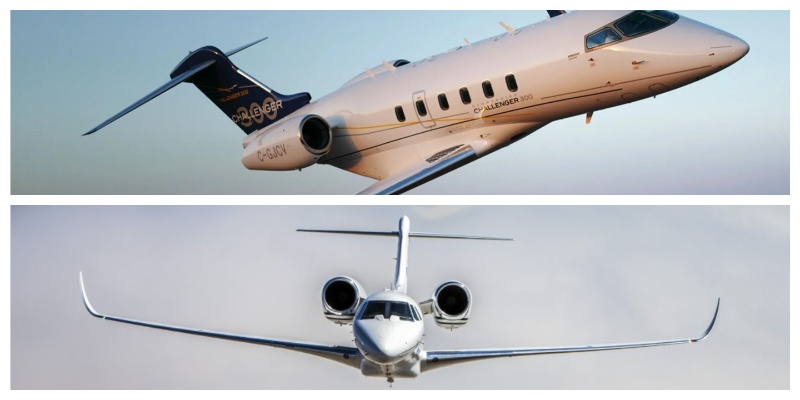
These aircraft offer exceptional performance, luxurious interiors, and range capabilities that cater to medium and long-haul flights. Below is an updated 2026 comparison to help you decide which best suits your travel needs.
Performance and Speed
The Cessna Citation X series is renowned as one of the fastest business jets in the world. The latest Citation X+ boasts a blistering maximum speed of 717 mph (Mach 0.935). This speed remains a primary selling point for travelers prioritizing time efficiency. With a range of 3,460 nautical miles, it is a powerhouse for coast-to-coast and international travel.
The Bombardier Challenger 300, and its newest variant, the Challenger 3500, delivers a commendable cruise speed of 541 mph. While it may not match the Citation X in pure velocity, the Challenger 3500 offers an impressive 3,400 nm range and superior “hot and high” performance, making it a favorite for regional and transcontinental missions alike.
Cabin Comfort and Space
The Challenger series shines in terms of cabin volume and comfort. The Challenger 3500 features the widest cabin in its class (7.2 ft) and a flat-floor design with a 6-foot stand-up height. It introduces the patented Nuage zero-gravity seats and voice-controlled cabin systems, allowing for greater freedom of movement for up to 10 passengers.
The Citation X offers a slightly more compact cabin with a height of 5.7 feet and a width of 5.5 feet. While it doesn’t match the Challenger’s width, the Citation X+ compensates with a focus on high-speed luxury and refined finishes, typically accommodating 8 to 12 passengers in a sleek, ergonomic environment.
Range and Efficiency
Both jets are capable of non-stop flights across the U.S. and parts of Europe. The Citation X+’s extended range of 3,460 nautical miles gives it a slight edge for transoceanic routes. However, the Challenger 3500 has closed the gap with a 3,400 nautical mile range, proving to be the more fuel-efficient choice for high-frequency operators.
Baggage Capacity
The Challenger 3500 maintains the lead in luggage utility, offering 106 cubic feet of internal storage that is accessible during flight. The Citation X+ provides a generous 82–104 cubic feet of storage, though this remains primarily external.
Avionics and 2026 Technology
The Challenger 3500 is equipped with the Collins Aerospace Pro Line Vision flight deck, featuring autothrottles as standard. The Citation X+ utilizes the Garmin G5000 suite, providing pilots with advanced situational awareness, including 3D weather radar and synthetic vision systems.
Cost and Value
In 2026, hourly charter costs for these super-midsize jets typically range from $7,500 to $9,500 per hour. While the Citation X’s speed can save valuable time on long-distance missions, the Challenger 3500 offers the lowest direct operating costs in its class, providing exceptional value for corporate fleets.
Summary
Choosing between the Challenger and the Citation X depends on your priority. If speed and time-savings are paramount, the Citation X+ is unparalleled. If you prioritize cabin width, internal baggage access, and modern “smart-cabin” tech, the Challenger 3500 is the premier choice.
To book either of these exceptional aircraft, contact Air Charter Advisors for expert guidance and personalized 24/7 service.